Evidence scope: broad 2026 appliance themes
This review is dated 22 July 2026. NielsenIQ's published outlook supports broad convenience and hygiene themes, not a quantified forecast for one cordless or wet-dry model. Surface types, housing patterns and local service economics need independent validation.
Convenience must include the maintenance cycle
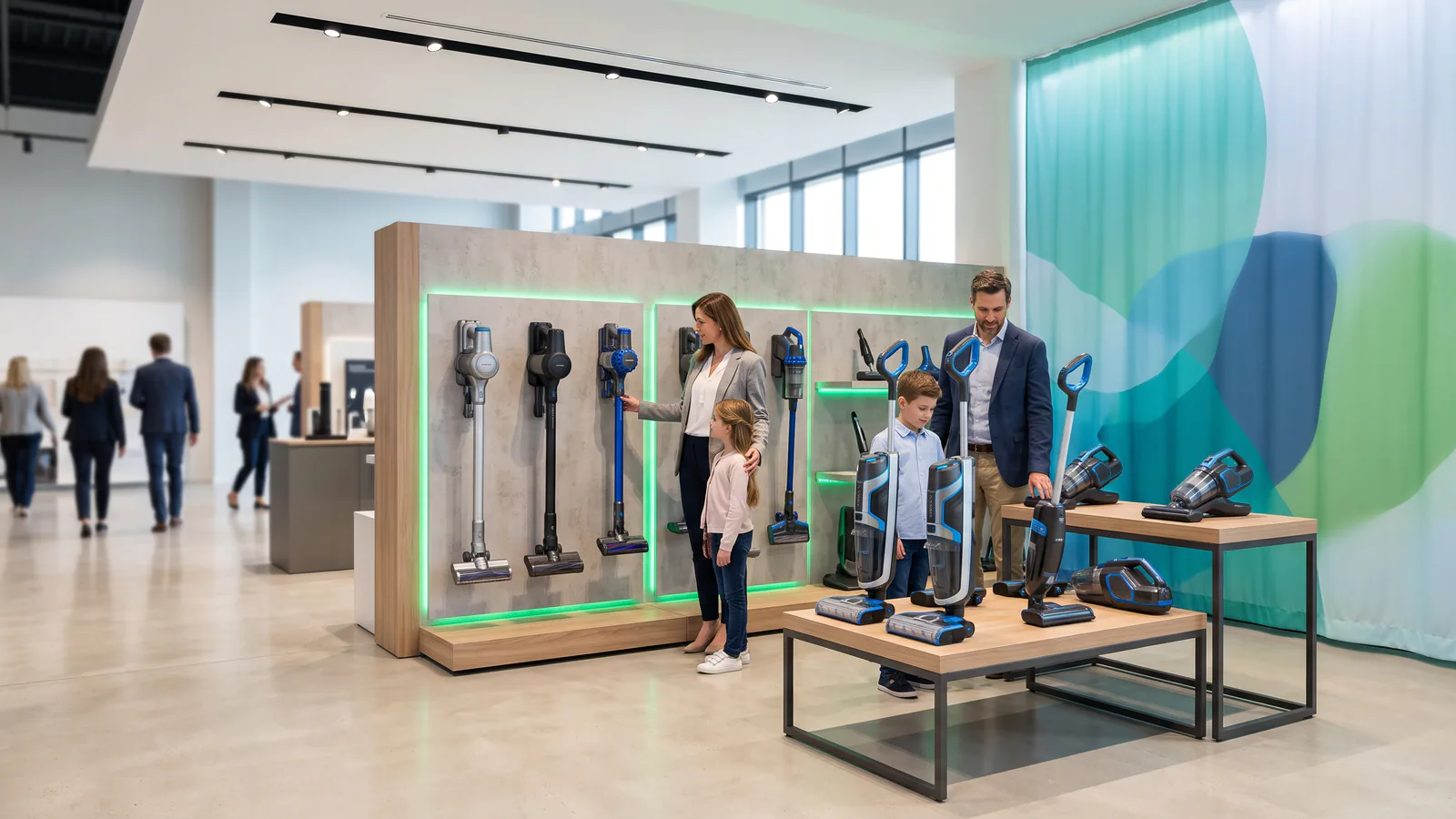
Cordless and wet-dry formats may answer convenience and hygiene needs, but their value depends on local floors, the test method, maintenance and serviceability.
Runtime or suction numbers are not comparable without settings, tools, battery state and surface conditions. Evaluate the entire cycle: pickup, edges, emptying, tank washing, drying, detangling, charging and storage. Then model the parts and consumables required locally.
The most common failure is comparing headline suction or runtime numbers produced under undefined conditions. Prevent it by separating facts already verified from proposals that still depend on the model, quantity, market or order. Keep the destination, electrical configuration and sales channel visible throughout the review; changing any of them can invalidate an earlier conclusion.
Evidence fields for cordless and wet-dry models
The working file should cover runtime method, battery service, surface compatibility, tank hygiene, brush access, filters and consumables. Each record needs a version, owner and relationship to the offered model. If a file describes a component, prototype or related model, label that limitation rather than silently treating it as final-product evidence.
| Record | Evidence to examine | Decision signal |
|---|---|---|
| Cordless vacuum | Weight, runtime and tools | Full cleaning route |
| Wet-dry cleaner | Pickup, edge work and tank hygiene | Mess-specific test |
| Brush system | Hair handling and access | Detangling time |
| Battery | Rating, charging and replacement path | Lifecycle plan |
| Consumables | Filters, rollers and detergents | Availability and cost model |
Test surfaces, runtime and cleanup in sequence
1. Define the floor mix
Hard floor, rugs, thresholds, hair and wet debris create different product demands.
2. Normalize performance claims
Ask for settings, tools, battery state and test conditions behind runtime or suction.
3. Complete the maintenance cycle
Empty, rinse, dry, detangle, store and recharge during evaluation.
4. Model service burden
Batteries, brushes, filters, seals and tanks need compatible parts and clear ownership.
5. Trial in real homes
Measure task completion and repeated-use friction rather than showroom impression.
Floor-care claims that require comparable methods
For runtime, hygiene and floor-surface validation, ask how each claim was produced and which model it describes. Descriptors such as standard, compliant, durable, quick or supported are conclusions until a method, configuration and record support them. Conflicting documents should be reconciled by model, revision, date and responsible issuer.
The offer boundary for runtime, hygiene and floor-surface validation belongs in writing: exclusions, buyer-supplied inputs and changes that reopen cost, timing or validation. Private-label artwork can alter roles even when the base appliance is unchanged, so the review should identify the responsible entity rather than infer it from appearance.
Floor-care pilot checklist
- State runtime setting and tool
- Test representative local surfaces
- Measure full device weight
- Inspect edge and furniture access
- Run dirty-water cleanup and drying
- Record filter and roller replacement
- Confirm battery service route
- Track support questions in pilot
Use real household routes in a pilot and record both completed tasks and repeated-use friction; showroom impressions are insufficient.
Example: time saved cleaning, time added washing tanks
A wet-dry cleaner may shorten mopping but add tank washing and drying. For some households that trade is attractive; for others it creates more work. Observe the complete task before claiming convenience.
Screening minMAX or COSONIC floor-care candidates
Ask minMAX or COSONIC for current floor-care candidates by market and use case. Runtime, battery, wet-dry function, consumables and service arrangements must be verified for the exact model; the trend article is not a catalog claim.
Ask minMAX or COSONIC for current floor-care models by use case, then confirm battery, consumables, rating and support through the RFQ form.
Build a service model for batteries and wet components
Cordless products need clear handling for battery complaints, chargers and replacement compatibility. Wet-dry products add tanks, seals, rollers and drying routines that can generate odor or hygiene issues when users skip maintenance. Map which parts are user-cleanable, replaceable or service-only according to the model instructions.
During a pilot, code support questions by stage: assembly, charging, operation, emptying, washing, drying and storage. This shows whether training or product selection is the main issue. Ask how replacement parts are identified across revisions and how long availability can be confirmed, without turning an estimate into a public guarantee. Serviceability should influence assortment choice before volume grows.
Sources and evidence
- Quality, Convenience, and Hygiene to Drive Growth in Home Appliances Market in 2026 — NIQ identifies convenience and hygiene as relevant 2026 appliance themes.
- General product compliance — Product, labeling and importer responsibilities remain model- and market-specific.
Floor-care trend questions
Can runtime numbers be compared directly?
Only when setting, tool, battery, surface and test method are comparable.
Is wet-dry suitable for every floor?
No. Follow the model instructions and validate intended surface compatibility.
Why does serviceability matter more for cordless products?
Battery and wear-part support can determine useful life and claim cost.
Should detergent be included in the range?
Only after confirming model instructions, local supply, material compatibility and recurring economics.