Evidence scope: United States coffee behavior
This review is dated 22 July 2026. The National Coffee Association source reports a U.S. specialty-coffee signal and must not be generalized into a global percentage or a forecast for a particular appliance. The buyer should pair it with current data from the destination channel.
From U.S. coffee interest to a local appliance hypothesis
The NCA source supports a dated U.S. specialty-coffee signal, not a global machine forecast. Buyers must identify the local drink, preparation effort and channel before selecting equipment.
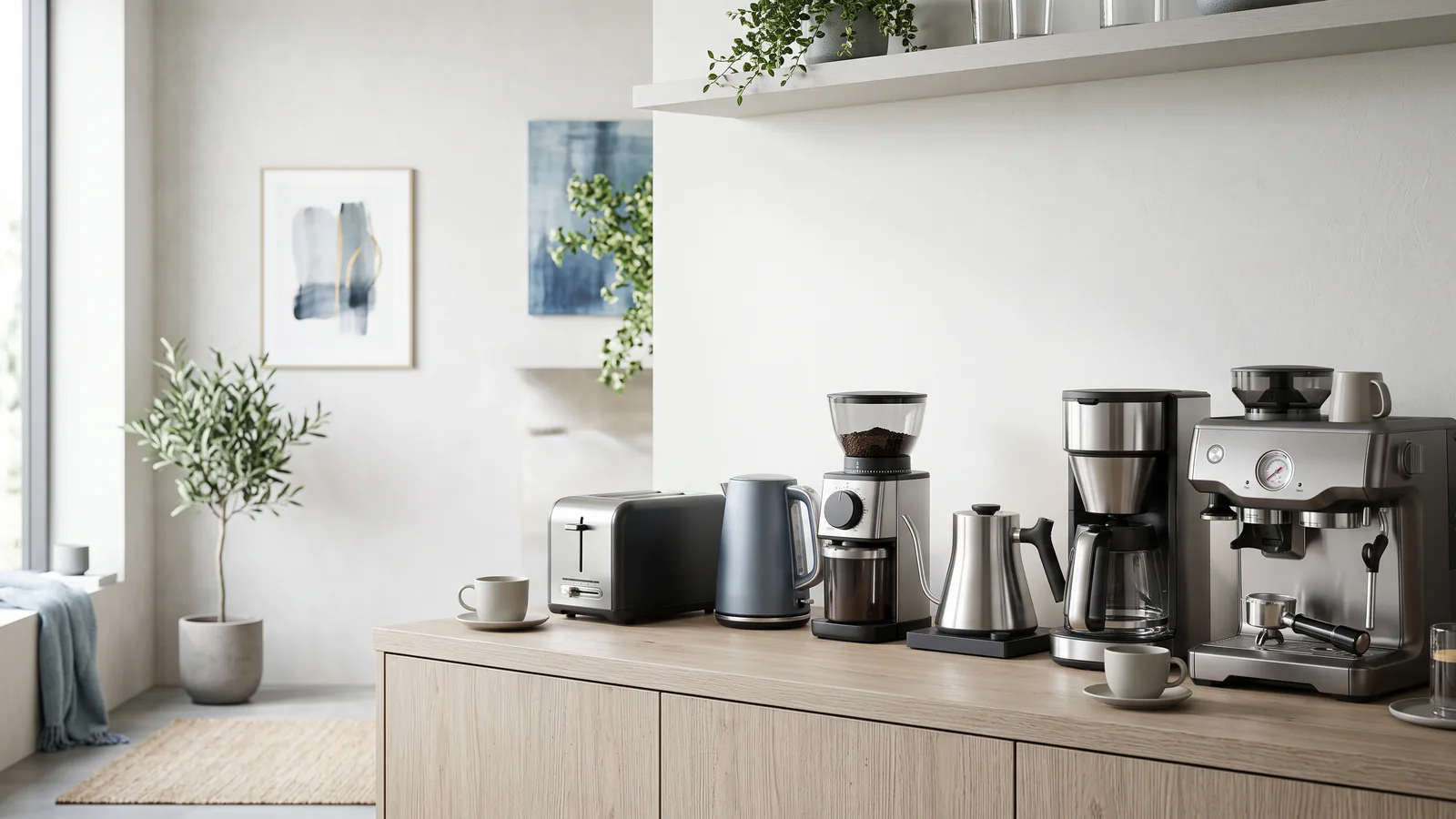
Test beverage appliances with controlled water, ingredients and methods. Observe temperature, repeatability, noise, scale, residue and cleaning. A matching breakfast set can aid merchandising, but every item still needs a distinct role and support plan.
The most common failure is generalizing U.S. specialty-coffee survey results into worldwide demand for one machine format. Prevent it by separating facts already verified from proposals that still depend on the model, quantity, market or order. Keep the destination, electrical configuration and sales channel visible throughout the review; changing any of them can invalidate an earlier conclusion.
Evidence fields for a breakfast-range decision
The working file should cover brew method, water temperature, grind control, kettle capacity, toasting consistency, cleaning routine. Each record needs a version, owner and relationship to the offered model. If a file describes a component, prototype or related model, label that limitation rather than silently treating it as final-product evidence.
| Record | Evidence to examine | Decision signal |
|---|---|---|
| Coffee maker | Brew method and batch size | Repeatability and cleaning |
| Grinder | Range, retention and noise | Fit with chosen method |
| Kettle | Capacity, control and pouring | Local drink habits |
| Toaster | Slot fit and consistency | Breakfast staple relevance |
| Breakfast set | Shared design and channel role | Bundle economics |
Validate the ritual, water path and cleanup
1. Map the morning mission
Separate speed, specialty preparation, family service and compact-home needs.
2. Respect market scope
Use the NCA evidence as a U.S. signal and seek local channel data before forecasting.
3. Test beverage repeatability
Control dose, water, time, temperature and grind where the format permits.
4. Inspect water and food paths
Materials, scale, residue, access and replacement parts shape ownership.
5. Coordinate the set
Use color, control language and capacity thoughtfully without forcing redundant appliances.
Coffee-trend assumptions to keep market-specific
For U.S. coffee evidence and local breakfast rituals, ask how each claim was produced and which model it describes. Descriptors such as standard, compliant, durable, quick or supported are conclusions until a method, configuration and record support them. Conflicting documents should be reconciled by model, revision, date and responsible issuer.
The offer boundary for U.S. coffee evidence and local breakfast rituals belongs in writing: exclusions, buyer-supplied inputs and changes that reopen cost, timing or validation. Private-label artwork can alter roles even when the base appliance is unchanged, so the review should identify the responsible entity rather than infer it from appearance.
Coffee and breakfast trial checklist
- Identify local coffee and tea habits
- Do not export U.S. percentages globally
- Test with consistent water and ingredients
- Measure cleaning and descaling steps
- Review food-contact materials by use
- Assess grinder retention and noise
- Keep capacity steps distinct
- Pilot bundles against single-item sales
Keep the country and evidence date beside every demand claim, and do not transfer U.S. percentages into another market’s forecast.
Example: specialty interest without espresso demand
Strong specialty-coffee interest does not automatically favor an espresso machine. A market may prefer pour-over, capsules, filter coffee or milk-based drinks. The correct appliance brief begins with the drink and user effort, not the trend label.
Reviewing minMAX or COSONIC breakfast candidates
Use minMAX or COSONIC coffee and breakfast pages to identify current candidates, then specify brew method, capacity, voltage, plug and target market. Availability and food-contact or electrical evidence require model-level confirmation.
Use minMAX or COSONIC coffee and breakfast pages for current candidates, then confirm brew method, rating, capacity and evidence through the RFQ form.
Account for water, ingredients and recurring care
Coffee and kettle performance can vary with water composition, scale, beans, grind and user technique. A buyer trial should record those inputs rather than attribute every difference to the appliance. Review descaling instructions, access to water paths and the availability of consumables or replacement parts relevant to the format.
For a breakfast bundle, test whether customers understand the combined proposition and whether capacities align. A large kettle beside a very small toaster may share a finish but serve different household missions. Compare bundle inquiries with single-product demand and watch for one item delaying replenishment of the set. Visual coordination is useful only when each appliance remains commercially credible on its own.
Sources and evidence
- Specialty coffee consumption hits 14-year high — NCA reports a dated U.S. specialty-coffee consumption signal; it is not global evidence.
- Food Contact Materials — EU food-contact compliance depends on material, use and applicable general or specific rules.
Coffee and breakfast trend questions
Does specialty coffee growth prove demand for grinders?
It suggests a preparation interest in the surveyed market, but local method and channel data are needed.
Should breakfast appliances be sold as matching sets?
Only when each item has a clear role and the shared design does not create excess inventory.
What should a coffee sample test include?
Repeatability, temperature where relevant, water flow, controls, cleaning, noise and accessory fit.
Are food-contact rules the same everywhere?
No. Materials, use conditions and destination requirements must be reviewed specifically.