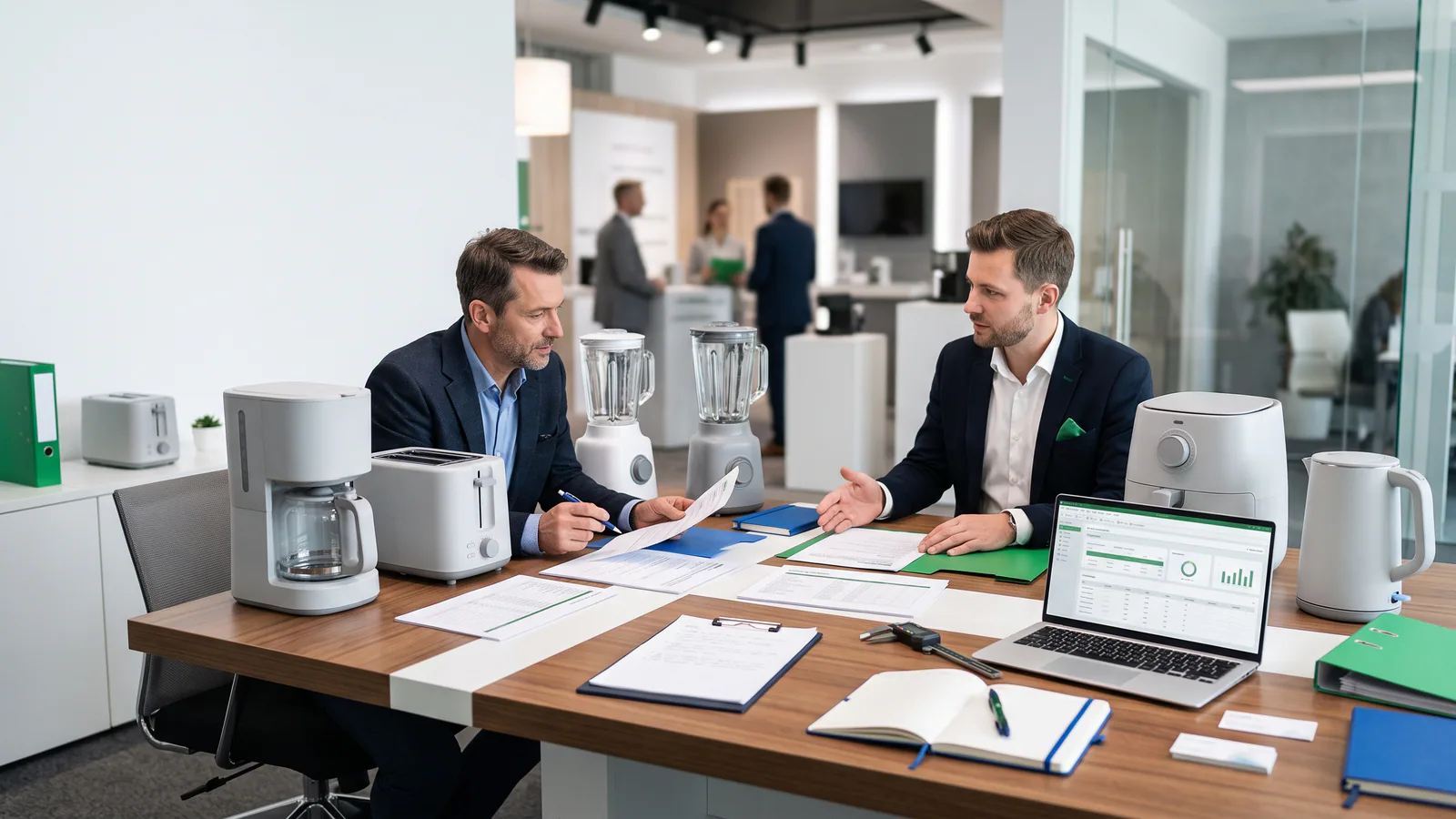
Start with the model and destination, not a certificate list
A compliance file should follow the exact appliance, revision, intended use and destination. The applicable rules determine the evidence; a generic request for every certificate reverses that logic.
Read declarations and reports for responsible entity, model scope, ratings, dates, standards and construction. Then reconcile labels, instructions and traceability with the physical sample. Component evidence can support a file but does not automatically cover the complete appliance.
The most common failure is collecting certificates by keyword without checking legal scope, model identity or final-product responsibility. Prevent it by separating facts already verified from proposals that still depend on the model, quantity, market or order. Keep the destination, electrical configuration and sales channel visible throughout the review; changing any of them can invalidate an earlier conclusion.
The importer’s model-market evidence file
The working file should cover Declaration of Conformity, technical documentation, test reports, labels and traceability, instructions and language, substance or food-contact evidence. Each record needs a version, owner and relationship to the offered model. If a file describes a component, prototype or related model, label that limitation rather than silently treating it as final-product evidence.
| Record | Evidence to examine | Decision signal |
|---|---|---|
| EU declaration | Final product and applicable EU acts | Manufacturer-signed, model-specific |
| Test evidence | Scope, ratings, construction and revision | Supports the declared product |
| Technical file | Design, risk and production information | Available to responsible party |
| Label/traceability | Manufacturer, importer and model data | Matches physical product |
| Instructions | Safe use and required languages | Matches target market |
Five stages of document review
1. Define the product and market
Record construction, rating, intended use and destination before asking for documents.
2. Identify applicable legislation
Use qualified advice to determine product-specific and horizontal requirements.
3. Review the declaration
Check responsible manufacturer, model, legislation, standards, signature and date where applicable.
4. Trace supporting evidence
Confirm reports and technical records cover the final product, not merely a component or similar model.
5. Close market-facing gaps
Approve labels, importer details, instructions, language and retention responsibilities.
Compliance shortcuts that create false confidence
For model-and-market compliance evidence, ask how each claim was produced and which model it describes. Descriptors such as standard, compliant, durable, quick or supported are conclusions until a method, configuration and record support them. Conflicting documents should be reconciled by model, revision, date and responsible issuer.
The offer boundary for model-and-market compliance evidence belongs in writing: exclusions, buyer-supplied inputs and changes that reopen cost, timing or validation. Private-label artwork can alter roles even when the base appliance is unchanged, so the review should identify the responsible entity rather than infer it from appearance.
Importer document checklist
- Build one row per model and market
- Verify the responsible legal entity
- Match ratings and revisions
- Check dates and report scope
- Do not treat CE as an EU-issued certificate
- Review RoHS scope and exemptions where applicable
- Assess food-contact use by material and conditions
- Record gaps before order approval
Maintain a gap matrix that names the missing review, owner and deadline; do not convert a pending file into a sales claim.
Example: a component report for a finished appliance
A test report for a motor or heating element can support a technical file, but it does not by itself establish compliance of the completed appliance. The final product's construction, intended use and applicable requirements still need assessment.
Requesting minMAX or COSONIC model evidence
Ask minMAX or COSONIC sales for documents by exact model, rating and destination. Available declarations, reports or material records must be confirmed and reviewed; market coverage cannot be inferred at brand level.
Ask minMAX or COSONIC for documents by model, rating and destination through the RFQ form, then use qualified compliance support for the final assessment.
Keep the compliance file current after launch
Document review does not end when the first shipment leaves. Preserve the supplied revision, declaration and supporting records, and define how the manufacturer will notify the importer of changes. A substituted material, component, rating or manufacturing site may require assessment even when the model name remains unchanged.
Track regulatory updates and market feedback through qualified compliance ownership. Complaints, incidents or authority requests need traceable product and importer information. For EU food-contact parts, consider the actual material and use conditions; for RoHS, verify current scope and exemptions; for household-appliance safety, identify the applicable general and product-specific standards and national adoption. These examples illustrate separate analyses, not one universal document bundle.
Sources and evidence
- Signing an EU declaration of conformity — The manufacturer is responsible for the declaration, which must cover the final product's applicable requirements.
- General product compliance — Importers should verify conformity assessment, technical documentation, labels, traceability and instructions.
- Restriction of Hazardous Substances — EU RoHS has defined scope, restricted substances, exclusions and exemptions.
Compliance-document questions
Who signs an EU Declaration of Conformity?
The manufacturer or authorized signatory takes responsibility for the declaration where applicable.
Is CE a certificate issued by the EU?
No. CE marking is the manufacturer's declaration after the applicable conformity process; some routes involve a notified body.
Does RoHS evidence cover food-contact safety?
No. They address different requirements and scopes.
Can one report cover several models?
Possibly, if scope and technical equivalence are valid and documented; do not assume from similar names.