What a sample approval actually authorizes
A sample becomes useful when its identity, configuration and test conditions are recorded. Approval should say exactly which features, artwork or packaging are accepted and which remain open.
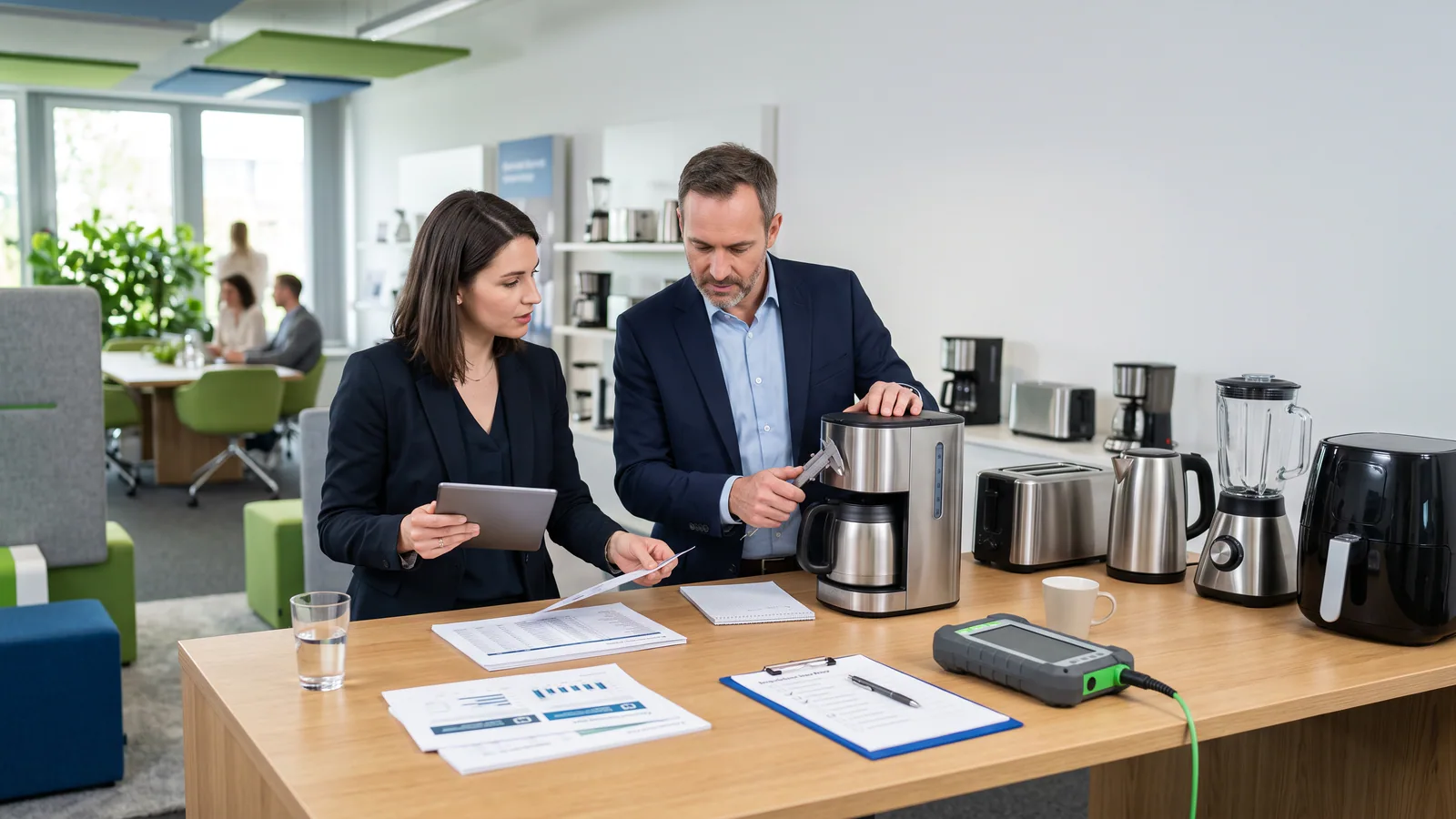
Treat cosmetic, functional, electrical and packaging observations separately. A unit can pass one area and remain unapproved in another. Destructive tests, regulatory testing or distribution trials may also require additional units rather than the retained reference.
The most common failure is approving appearance while leaving rating, function, accessories, packaging or construction unrecorded. Prevent it by separating facts already verified from proposals that still depend on the model, quantity, market or order. Keep the destination, electrical configuration and sales channel visible throughout the review; changing any of them can invalidate an earlier conclusion.
The records that make a sample traceable
The working file should cover sample identity, critical dimensions, functional test, electrical rating, materials and workmanship, packaging reference. Each record needs a version, owner and relationship to the offered model. If a file describes a component, prototype or related model, label that limitation rather than silently treating it as final-product evidence.
| Record | Evidence to examine | Decision signal |
|---|---|---|
| Identity | Model, revision, rating label and date | Reference belongs to quoted offer |
| Function | Defined task and conditions | Result and abnormal behavior recorded |
| Workmanship | Agreed visual zones and limits | Defects classified consistently |
| Accessories | Quantity, fit and instructions | Complete and usable set |
| Packaging | Protection, artwork status and fit | Separate prototype from final |
A five-part appliance sample test
1. Register the sample
Photograph the rating label, model, revision, accessories and received condition before testing.
2. Compare with the brief
Check every must-have specification and list substitutions rather than accepting them silently.
3. Exercise real use
Run repeatable operating, cleaning, assembly and storage tasks relevant to the intended customer.
4. Inspect failure-sensitive details
Review heat, motion, seals, switches, attachment retention and other model-specific critical points with qualified support.
5. Issue a disposition
Approve, reject or approve with clearly bounded corrections; decide whether a new sample is required.
Sample claims that need measured evidence
For sample identity, testing and approval disposition, ask how each claim was produced and which model it describes. Descriptors such as standard, compliant, durable, quick or supported are conclusions until a method, configuration and record support them. Conflicting documents should be reconciled by model, revision, date and responsible issuer.
The offer boundary for sample identity, testing and approval disposition belongs in writing: exclusions, buyer-supplied inputs and changes that reopen cost, timing or validation. Private-label artwork can alter roles even when the base appliance is unchanged, so the review should identify the responsible entity rather than infer it from appearance.
Sample-review checklist
- Create a sample ID before testing
- Use the final intended electrical variant
- Test functions against written conditions
- Photograph deviations with scale
- Check assembly, cleaning and storage
- Record accessory and manual versions
- State what approval does and does not cover
- Retain or seal the agreed reference
Sign the report with the sample ID, disposition and required follow-up; seal or photograph the retained reference where appropriate.
Example: product approved, carton still open
If a blender sample performs well but arrives with a temporary label and prototype carton, approve only the tested product functions—not the unfinished label or packaging. The report should list those open items and require later artwork or packaging approval.
Requesting and approving minMAX or COSONIC samples
Buyers can request minMAX or COSONIC samples after identifying a model and market configuration. Sample cost, freight, preparation time and available options require confirmation. A sample approval should point back to the RFQ and final specification.
Select the exact minMAX or COSONIC model and destination before requesting a sample through the RFQ form, because cost, freight and configuration are conditional.
Design repeatable sample tests
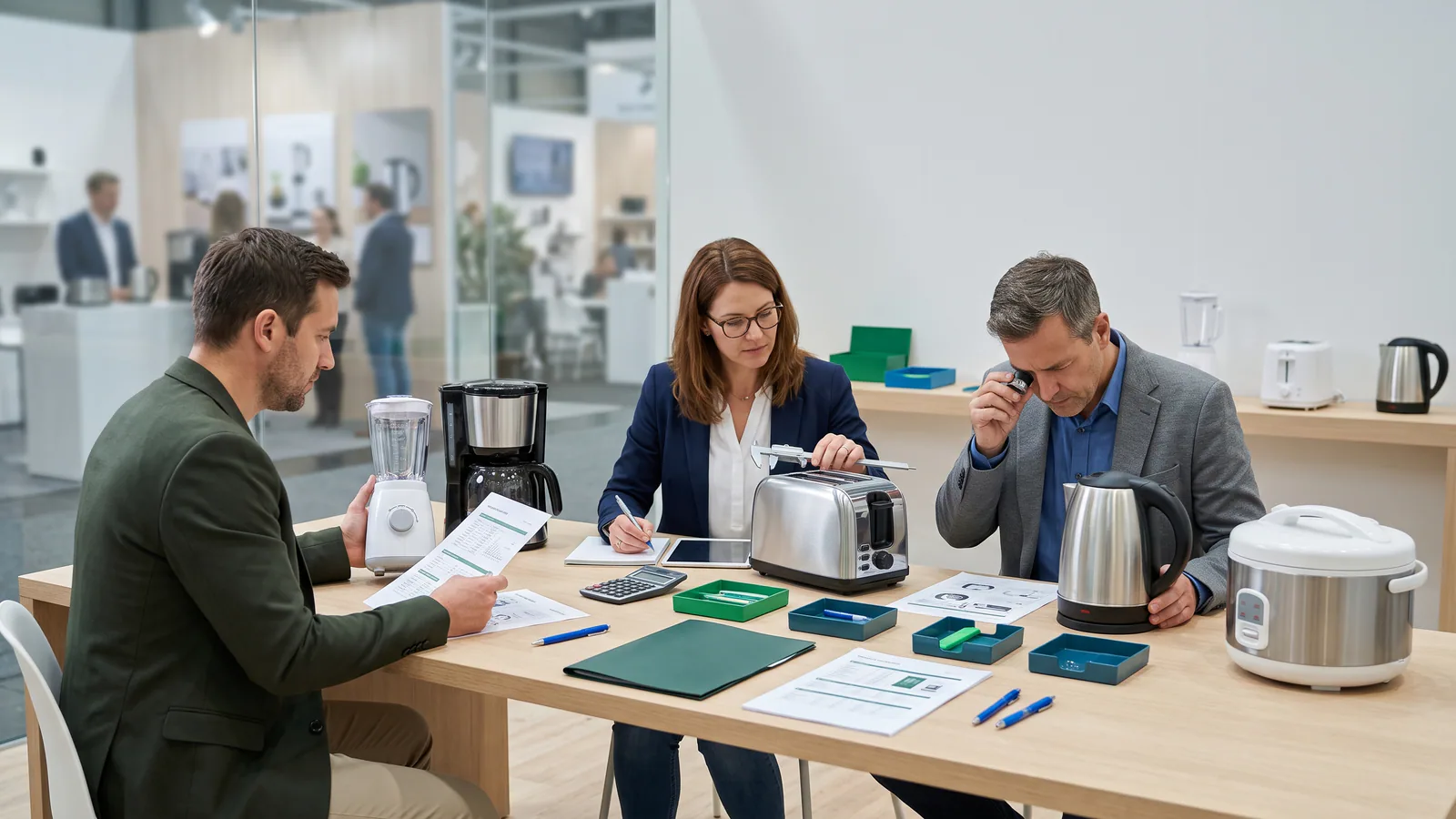
Write test instructions so another reviewer can reproduce the setup: ambient conditions where relevant, input material or load, operating mode, duration, measurement tool and expected result. For a kettle this may include fill level and boil behavior; for a floor-care product it may include surface, debris and battery setting. Do not turn these examples into a universal protocol.
Capture the user sequence as well as measurements. Unboxing, assembly, control comprehension, cleaning and storage often expose issues that a bench function check misses. If a defect appears, preserve the unit and circumstances before modification. The objective is not to create laboratory authority internally, but to make the buyer's commercial sample decision traceable and useful to qualified reviewers.
Sources and evidence
- ISO 28590:2017 — The ISO 2859 series provides structured acceptance-sampling concepts; sampling must be defined rather than intuitive.
- ISO 9001 and Inspection: What It Says - Where Are You? — Documented receiving, in-process and final inspection have distinct roles in a quality system.
Sample evaluation questions
Is one sample enough for every test?
Not always. Destructive, compliance or packaging work may require separate units and qualified laboratories.
What is a golden sample?
It is a controlled physical reference agreed by the parties, used together with written specifications and inspection criteria.
Can a catalog photo replace a sample?
No. It cannot confirm operation, construction, rating, accessories or the delivered finish.
When is resampling sensible?
After a material, electrical, structural or unresolved critical change that the first sample did not represent.